2026-06-02 00:00:00
537 views
Deepening Quality Improvement and Enhancing Efficiency | Our Company Successfully Held the 2026 Annual Cross-departmental Quality Special Project Review Meeting
Quality is the cornerstone of a company's sustainable operation and the core lifeblood that connects the entire value chain, encompassing research and development, supply chain, production,......
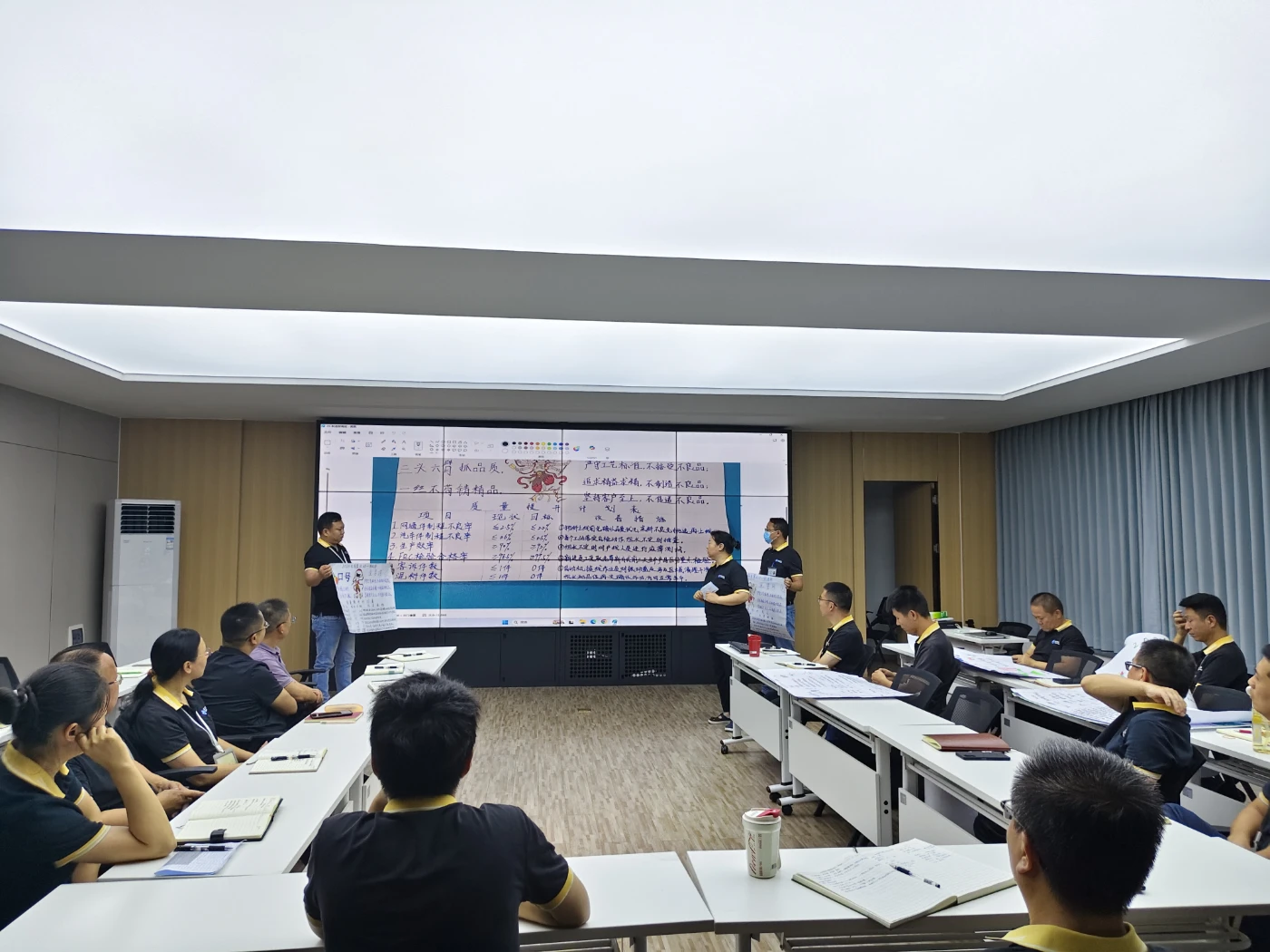
on-site special report. Each business segment reported on the annual quality improvement projects, implementation paths, and phased plans in turn. The company's senior management team conducted on-site review, judgment, and precise guidance, coordinating and optimizing the implementation plan for quality improvement throughout the entire chain., and project leaders. This review adopted a combination of results board display andIn order to continuously improve the construction of the quality management system, anchor the annual quality upgrade strategic deployment, and coordinate and promote the implementation of quality improvement throughout the entire process, the company recently organized a review meeting for the 2026 annual quality special improvement projects, attended by the heads of various functional departments, middle-level management personnel
Multiple departments report their work in turn, using visual carriers to concretize improvement plans
This review innovatively adopted a reporting format that combined hand-drawn project boards with large-screen demonstrations. Representatives from several major functional departments, including management, warehousing, quality assurance, plastics, injection molding, assembly, finance, PMC, procurement, research and development, and business, took turns on stage. Relying on the visual boards, the reporting leaders from each department provided in-depth explanations, focusing on quality pain points, improvement goals, control measures, and implementation timelines in their respective areas.
The Management Department is based on empowering quality management with human resources, focusing on two core topics: the construction of a quality talent echelon and systematic training for all employees on quality literacy. Relying on the project board, it outlines construction goals, implementation milestones, and evaluation systems. It clearly states that by strengthening the foundation of talent management, it will provide human support for the enterprise's overall quality control. The participating reviewers conducted special inquiries and discussions on the implementation details of training and the mechanism for implementing assessments.

The Warehousing Department focuses on quality control in the warehousing supply chain, centering around improvement topics such as material warehousing protection, standardized control of inbound and outbound processes, and refined inventory management. By combining the layout diagram of the warehouse area, it sorts out optimization plans, precisely focuses on quality risks at the warehousing end such as material damage, errors in receiving and dispatching, and formulates standardized control rules for the entire process, establishing the first line of defense for material quality from the source of warehousing.

As the core functional department for quality control, the Quality Assurance Department closely focuses on the entire process of quality control, including incoming material inspection, in-process inspection, and finished product delivery. Relying on visual and textual displays, it refines inspection specifications and abnormality closed-loop handling procedures for each link, continuously improves the whole-process quality control mechanism, and strictly controls the quality of products at the factory exit.

The Plastics Department is committed to the goal of improving on-site manufacturing processes, focusing on two major challenges: reducing process defects and implementing standardized on-site operations. By quantifying defect rate improvement indicators and dissecting implementation measures from multiple dimensions including people, machines, materials, methods, and environment, the department relies on refined management of the production site to steadily enhance the quality of finished product manufacturing processes.

The Injection Molding and Assembly Department focuses on ensuring equipment accuracy, revolving around topics such as preventive maintenance of equipment and precision control of tooling and fixtures. With the aid of detailed equipment construction diagrams, they explain maintenance plans and inspection specifications, aiming to stabilize equipment operating conditions and reduce potential defects in the production process from the hardware level.

The Quality Assurance Department is deeply involved in process and mold optimization work, focusing on mold improvement and production process iteration optimization topics. By combining product structure drawings to disassemble process upgrade plans and relying on front-end process optimization, they aim to enhance the quality control level from the source of product molding.

The Finance Department focuses on refined quality cost control, taking quality loss cost accounting and quality investment budget control as research topics. Relying on financial data analysis, it builds a quality cost control model to drive quality improvement and optimization in various business processes through cost control data.

The PMC Planning Department focuses on the topic of improving quality through production and sales collaboration and material planning control. With the core goal of enhancing material completeness and optimizing production scheduling, the department explains the production scheduling optimization plan through visual logic boards, striving to avoid various quality loss issues arising from material backlog and planning mismatch.

The procurement department focuses on upstream supply chain quality pre-control, centering on improvement topics such as supplier graded access and pre-inspection of incoming materials. Relying on visual boards, it explains the idea of balanced control of supply and demand quality, improves the supplier's full life cycle assessment management system, and controls the quality of incoming materials from the source of the supply chain.

The R&D department focuses on controlling the source of product design, with the direction of tackling key issues in standardizing new product development and preventing design defects in advance. By combining product structure schematics, it refines the details of reliability verification and scheme review control, avoiding potential quality defects in mass production during the R&D stage.

The Business Department focuses on optimizing quality feedback from the market side, emphasizing the implementation of customer quality demands and order delivery quality control. Using hand-drawn boards featuring trophy elements to anchor the goal of quality improvement and excellence creation, the department sorts out closed-loop improvement plans for customer complaints, relying on front-end market feedback to inversely drive quality upgrades across the entire internal chain.

Senior executives comment on the implementation strategies one by one and coordinate the deployment of subsequent implementation work
After the completion of the project reports from each department, the company's management team provided feedback and guidance on the feasibility, quantification of indicators, and implementation risks of each project. While fully affirming the effectiveness of the quality improvement projects based on the actual business situation of each department, the management team put forward suggestions for optimization and rectification in terms of indicator refinement, implementation cycle, supporting resources, and risk emergency plans. The meeting emphasized that quality management runs through the entire industrial and business chain of the enterprise. Each department needs to break down functional barriers, strengthen collaboration and coordination, and strictly optimize project plans in accordance with the review feedback.
Unite our efforts to seek development and promote quality upgrading on a regular basis
This special quality project review meeting broke the inherent mode of independent quality control by a single department, enabling cross-departmental experience sharing, joint research on problems, and collaborative development of solutions, further breaking down the barriers to collaborative quality management across the entire chain. Moving forward, the company will use the improvement projects finalized during this review as a starting point, establish a regular supervision mechanism for monthly follow-ups and quarterly reviews, steadily implement various quality improvement measures, continuously improve the comprehensive quality management system, and strengthen the company's core competitiveness with excellent quality, thereby facilitating the company's high-quality and sustainable development.