Radar bottom shell
Model: CD127-C010-1000
Applications
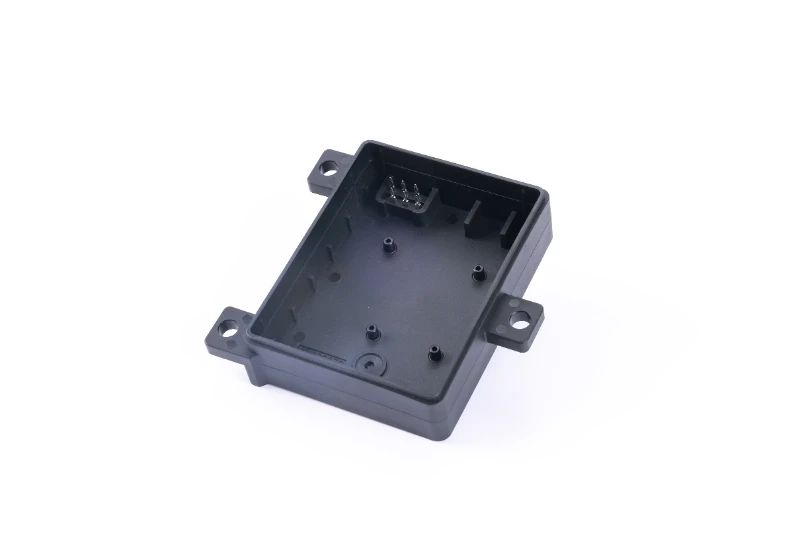
Description
CD127-C010-1000 is a precision 5Pin plastic connector housing, integrally molded, designed for use with the STA77 series connectors. It features comprehensive multi-view annotations for the overall shape, Pin positions, and installation and positioning dimensions, with multiple reference geometric tolerance controls to meet electrical insulation and PCB assembly requirements. The drawing is standardized and complete, encompassing technical requirements for electrical performance, appearance, and injection molding. It is environmentally friendly and compliant, suitable for mass precision injection molding production.
Features
- The appearance is black, plump and complete, with uniform color
- The surface should be free of defects such as scratches, cracks, and silver streaks
- The outer surface is fine sandpaper, referring to VD13400 sample CN-V0024
- Regular floating stitches are allowed, creating a seepage and diffusion effect
- The limit mold top material push rod area is 0.2mm below the surface
- After trimming, the shape is neat and beautiful, with a height of ≤0.3mm, and no sink marks
Specifications
Whitepapers
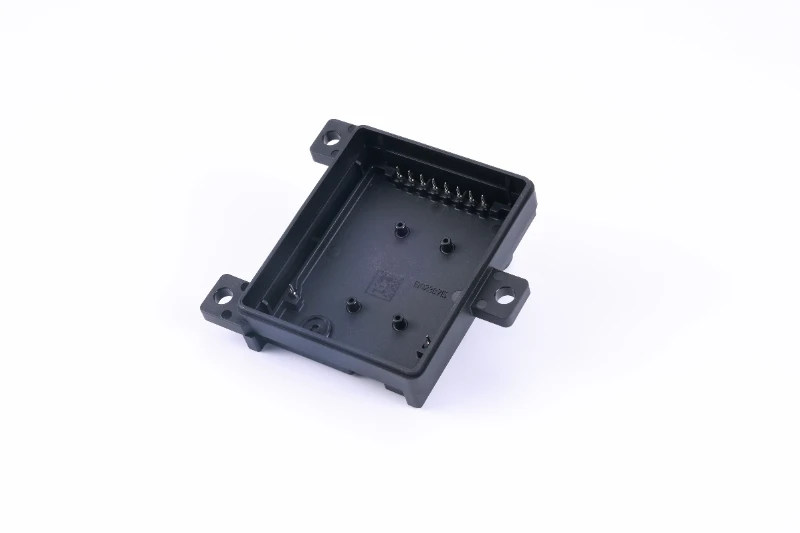
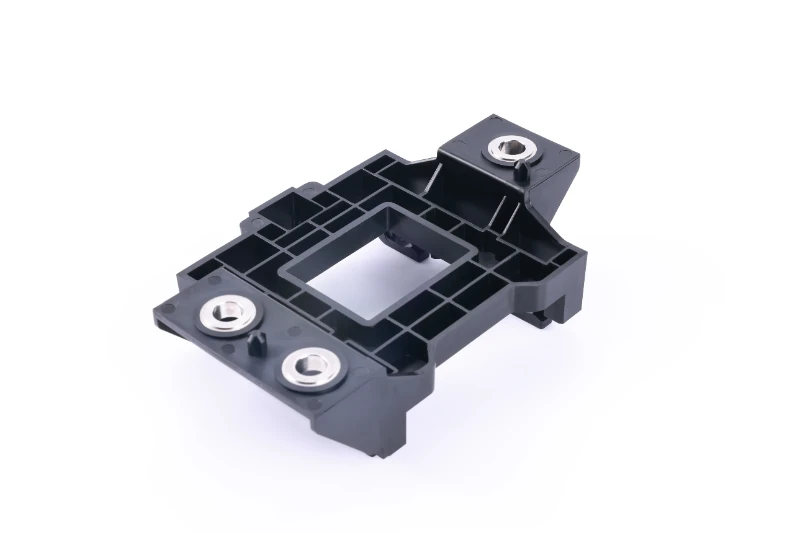
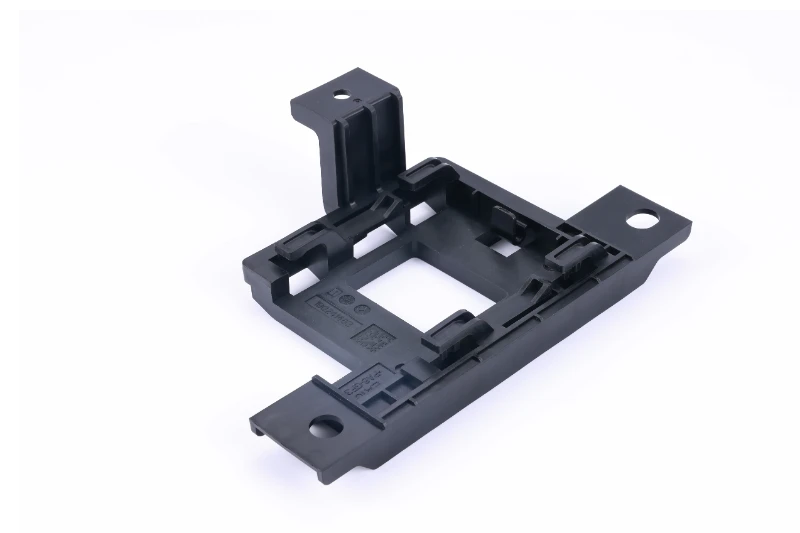
Features
- The appearance is black, plump and complete, with uniform color
- The surface should be free of defects such as scratches, cracks, and silver streaks
- The outer surface is fine sandpaper, referring to VD13400 sample CN-V0024
- Regular floating stitches are allowed, creating a seepage and diffusion effect
- The limit mold top material push rod area is 0.2mm below the surface
- After trimming, the shape is neat and beautiful, with a height of ≤0.3mm, and no sink marks
Specifications
Radar bottom shell
Model: CD127-C010-1000
Applications
Description
CD127-C010-1000 is a precision 5Pin plastic connector housing, integrally molded, designed for use with the STA77 series connectors. It features comprehensive multi-view annotations for the overall shape, Pin positions, and installation and positioning dimensions, with multiple reference geometric tolerance controls to meet electrical insulation and PCB assembly requirements. The drawing is standardized and complete, encompassing technical requirements for electrical performance, appearance, and injection molding. It is environmentally friendly and compliant, suitable for mass precision injection molding production.
Whitepapers
Related Cases

Ultrasonic/Millimeter-Wave Radar Housing | Automotive ADAS System Supporting Project
The original radar housing of the ADAS perception module in domestic new energy vehicle companies faced issues such as insufficient injection molding precision, sealing failure, and deformation under high and low temperatures, leading to abnormal radar detection after water infiltration on bumpy roads. Our company has customized a modified material precision radar housing, optimized the sealing grooves and internal positioning structure, and met the automotive-grade AEC-Q reliability requirements. The housing meets the standards for shock resistance, weather resistance, and electromagnetic shielding performance. It is verified simultaneously with EPS supporting components, achieving fixed-point mass production for multiple vehicle models and significantly reducing the rework rate of radar modules.
国内知名新能源车企

Automotive electronic components | New energy vehicle radar housing & EPS steering system supporting projects
Domestic new energy vehicle companies have encountered issues with the original design of their onboard millimeter wave/ultrasonic radar housings, which lack sufficient shock resistance and waterproof performance. Additionally, the EPS steering connectors are prone to loosening under high-temperature conditions, affecting driving perception and steering safety. Our company has developed a dedicated precision housing for radar, which complements the EPS steering system connection components and has passed a full set of automotive-grade tests. The product is resistant to shock, high and low temperatures, and has improved assembly efficiency by 30%. It has successfully entered the mass production projects of vehicle companies and achieved stable batch supply.
某智能汽车企业
Related Solutions

Complete structural solution for 4D imaging millimeter-wave radar
The vehicular millimeter-wave radar, installed at the front of the vehicle, must withstand vibrations from driving, exposure to wind, sand, rain, and snow, while also strictly controlling electromagnetic interference. Shell deformation and insufficient wave absorption performance can directly lead to inaccurate radar ranging and angle measurement, resulting in false alarms and missed detections. Many suppliers can only provide single components, requiring customers to integrate from multiple suppliers, which incurs high coordination costs.

Automotive EPS (Electric Power Steering) System Connection Solution
With the popularization of intelligent driving, the EPS steering electronic control signals have become increasingly complex. Vehicle vibration during driving, alternating high and low temperatures, and contamination from engine compartment water and gasoline can easily cause poor contact and signal disconnection of connectors, posing significant safety hazards to driving. Traditional universal connectors struggle to meet the stringent safety requirements for in-vehicle applications.